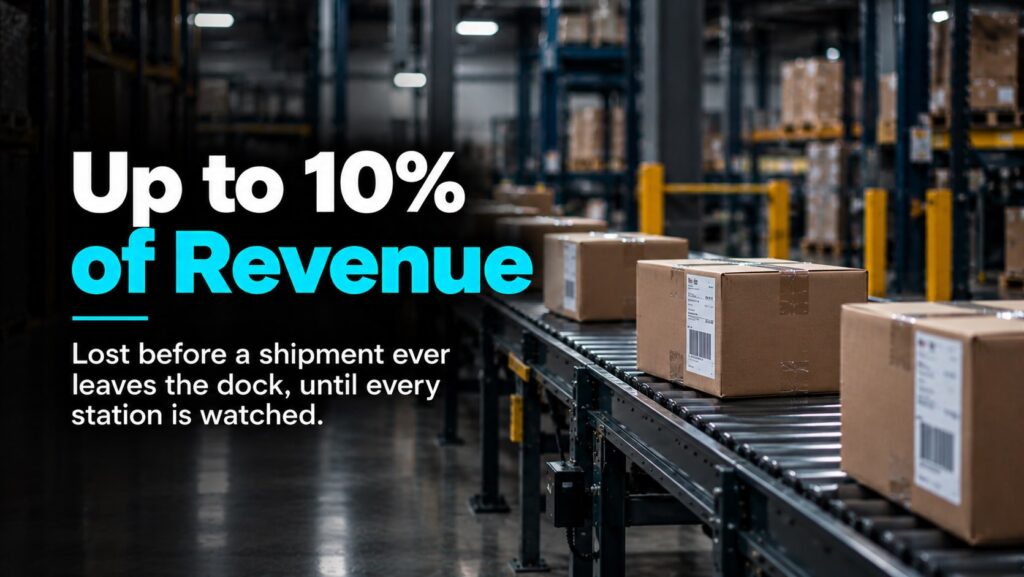
Ask an operations leader where their damage claims come from and they’ll usually point to the carrier, and ask where their order accuracy problems come from and they’ll usually point to a training gap on the floor, and both answers are reasonable without being especially useful, since the actual moment an error is created, a mis-pick, a damaged case that gets boxed anyway, a shipment that goes out missing a unit, almost never gets seen by anyone at all. It gets discovered downstream, days later, by a customer, an auditor, or a chargeback notice, at which point there’s no way to tell whether it happened at receiving, at picking, at packing, or in transit. What actually costs a warehouse money isn’t any single error, it’s that nobody can say with certainty where a given error came from, which means nobody can fix the process that keeps producing it, and add up enough of those unwatched moments and the number climbs to as much as 10% of revenue.
What actually causes shipment inaccuracies, damage, and compliance issues in a warehouse?
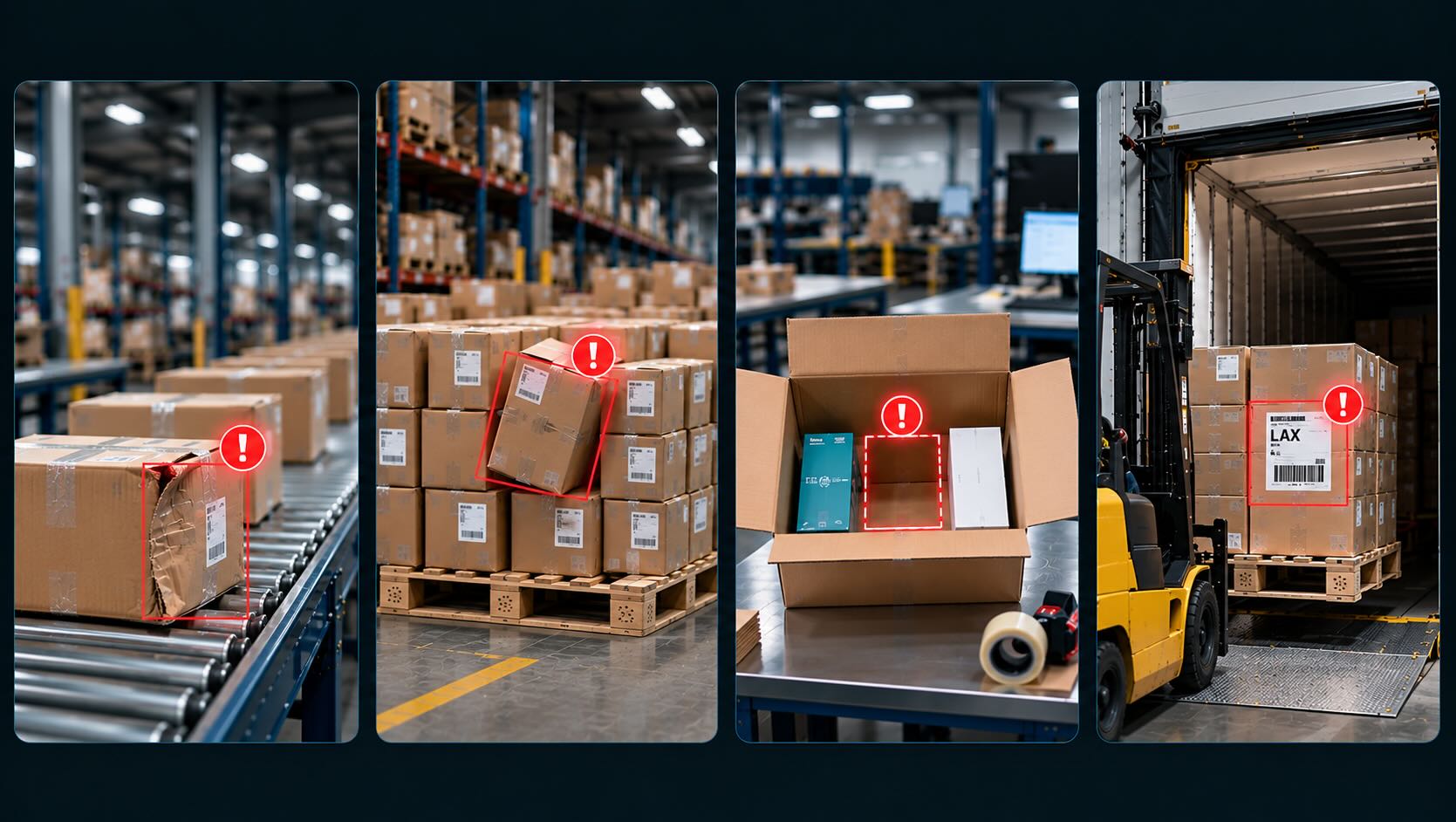
It’s tempting to treat inaccuracy as a single problem with a single fix, more training, a stricter checklist, a new hire, but in practice it’s an accumulation of small failures spread across stations that don’t talk to each other. A case gets damaged at receiving but isn’t flagged, so it moves forward into inventory looking fine on paper, and a picker grabs the wrong SKU because two products look similar on a shelf, and nothing catches it until the order’s already staged, and a packer seals a box missing a unit because the count happened visually, under time pressure, at the end of a long shift. Each of these is a small, human, forgivable moment, and the problem is that a warehouse running on periodic spot-checks and end-of-line audits only catches a fraction of them, with no way of knowing which fraction. That’s really the source of the up-to-10% figure, not one big failure, but hundreds of small ones, spanning inaccuracies, damage, and compliance gaps alike, that never got observed at the moment they occurred.
Why do manual QC checks miss more than teams expect?
Most facilities already do some form of inspection, and the trouble is that manual QC is sampling, not coverage, since a team physically cannot open every case, recount every order, and inspect every pallet without slowing the floor to a crawl. So inspection gets rationed, a percentage of orders, a percentage of a shift, spot-checks on high-value SKUs, which is a reasonable trade-off when the alternative is grinding throughput to a halt, but it means most shipments move through the facility with zero eyes on them at the point that matters. Manual QC misses more than most teams expect, not because the people doing it are careless, but because sampling was never built to catch everything, only to catch enough to feel reassured, and the gap between enough to feel reassured and actually caught is exactly where the 10% lives. This same gap, one that traces back to coverage rather than effort, is worth a closer look in how continuous inspection changes the warehouse floor.
What does continuous inspection actually look like on the floor?
The alternative to sampling isn’t hiring more inspectors, it’s removing the sampling problem entirely by watching every unit at every station instead of a percentage of them. That means quality control that runs continuously at dock door, conveyor, packing, and staging, using cameras that feed directly into a facility’s existing WMS or ERP. An inbound shipment gets checked for damage the moment it’s received instead of being discovered damaged three transfers later, and an order gets verified against what was actually picked before it’s sealed instead of after a customer calls. This is what it means to say vision AI is already monitoring every station, that the inspection isn’t a periodic event anymore, it’s a constant one, which is really the only way to close the gap sampling leaves open.
From sampling to 100% order accuracy
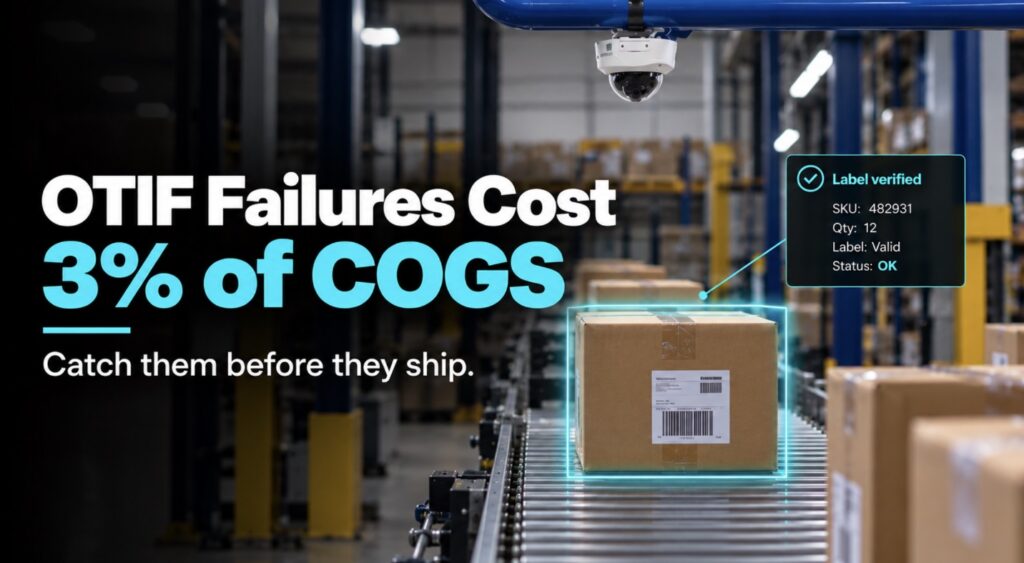
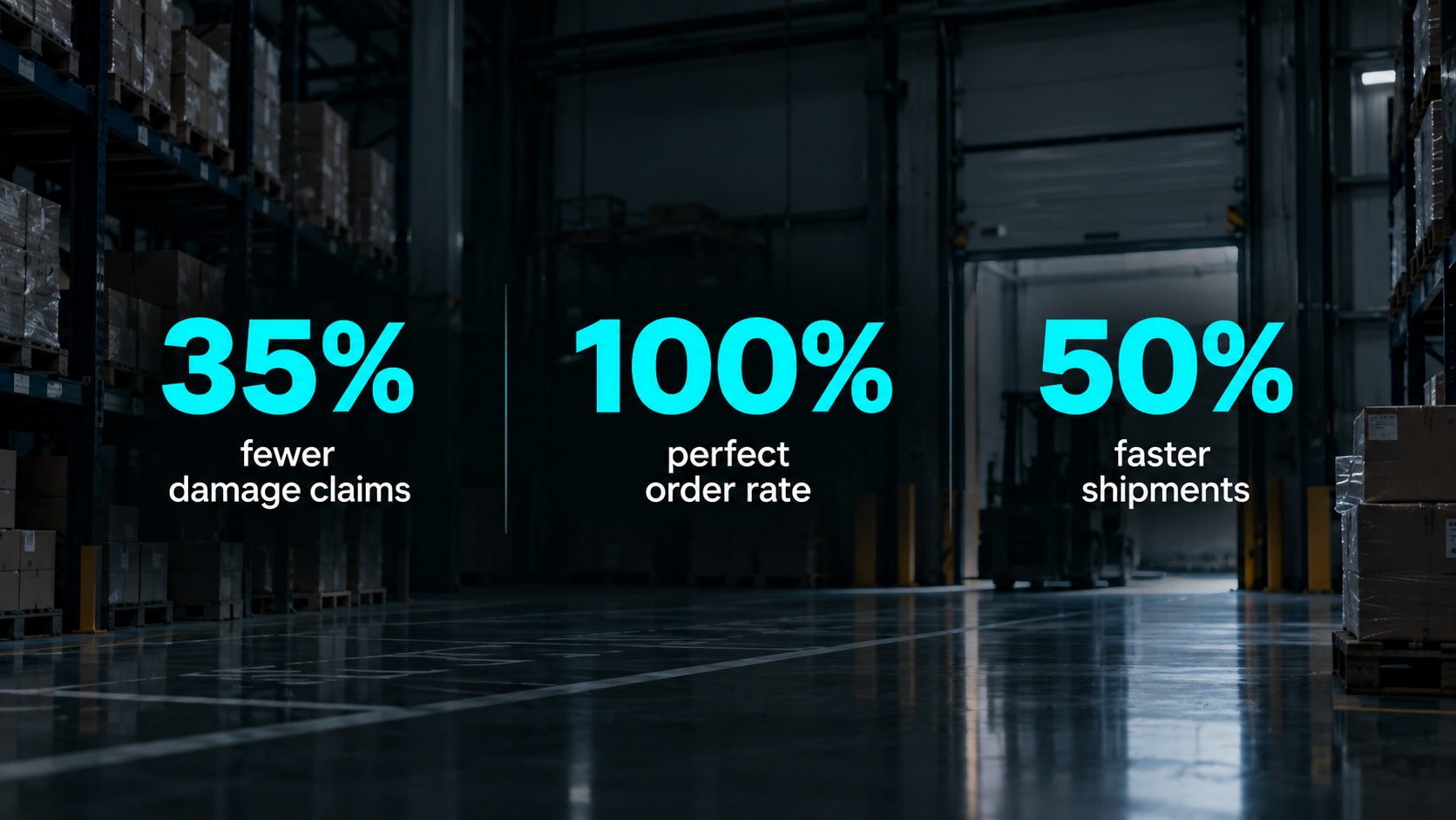
This is where the shift from sampling to continuous inspection stops being theoretical and starts showing up in the numbers operators actually track, and it’s worth being clear that this isn’t a separate system bolted onto the floor, it’s the same quality control layer watching every station continuously instead of on a schedule. Facilities running Arvist’s vision AI across their floor see damage caught before it ships instead of after a customer complains, which is the direct driver behind a 35% reduction in damage claims, and order accuracy climbs to a 100% perfect order rate because every pick and every seal gets verified in real time rather than sampled after the fact. Throughput improves too, with shipments moving 50% faster once teams stop losing time to manual recounts and after-the-fact investigations. None of this replaces the team on the floor, it gives them a system that catches what sampling was always going to miss, and it closes the loop when something does slip through, since a flagged issue at QC can roll straight into Claims Management, turning what used to be a multi-day investigation into a resolved dispute in minutes, backed by the same visual record that caught the problem in the first place.
Frequently asked questions
What percentage of warehouse revenue is lost to shipment inaccuracies, damage, and compliance issues?
Up to 10% combined, and almost none of that loss traces back to a single event, since it’s driven by errors that go undetected at the point they occur and surface later as claims, chargebacks, fines, or lost customer trust.
What’s the difference between manual QC and continuous vision AI inspection?
Manual QC relies on sampling, checking a percentage of orders or shipments because inspecting everything by hand isn’t operationally feasible at scale, while continuous vision AI inspection is built to cover far more of the floor than a manual team can, closing most of the sampling gap manual checks leave open.
Which stations in a warehouse benefit most from automated QC?
Dock door, conveyor, packing, and staging, since together they cover the full path from inbound receiving through outbound shipment and catch errors at the exact point they’re introduced.
Does vision AI QC require replacing existing warehouse infrastructure?
No, and that’s really the point of it. Preconfigured cameras are shipped as part of setup, but there’s zero change management required and no millions of dollars in infrastructure spend, since the system integrates with a facility’s existing WMS or ERP.
How does continuous QC affect order accuracy?
Facilities running continuous inspection see order accuracy reach a 100% perfect order rate, since every pick and pack is verified as it happens instead of being checked after the fact on a sample basis.
Does quality control monitoring help with workplace safety as well as shipment errors?
It does, and continuous monitoring has been linked to a 66% reduction in worker comp claims, largely because visibility into floor operations surfaces unsafe conditions alongside product errors.
What happens when vision AI QC catches a damaged shipment?
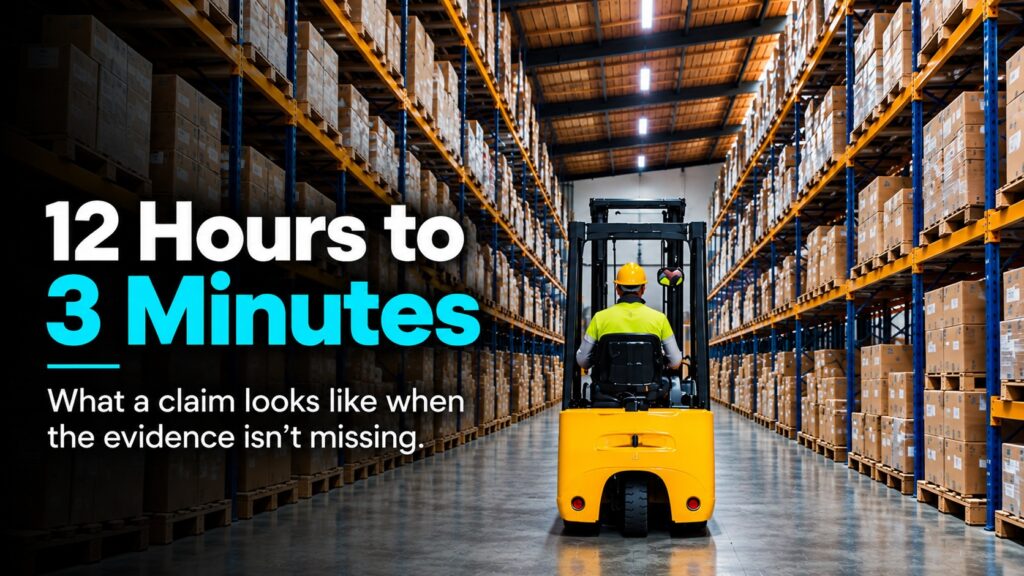
The flagged issue and its visual evidence can feed directly into a claims workflow, giving teams the documentation needed to resolve a dispute in minutes instead of launching a multi-day manual investigation.