What Shipped at Arvist: July 2026
This month was about closing the loop on claims and making the platform easier to configure and act on in real time. Claims Management went live inside the Quality Control platform, alerts moved into real time, and detection got smarter for products that don’t have a scannable label.
Let’s get into it.
Claims Management is live 🎉
What we shipped
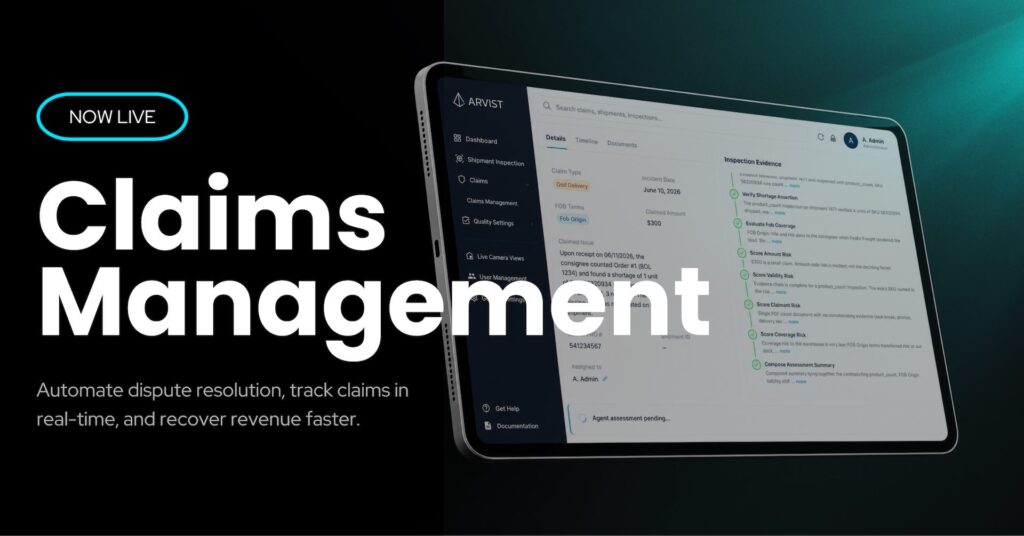
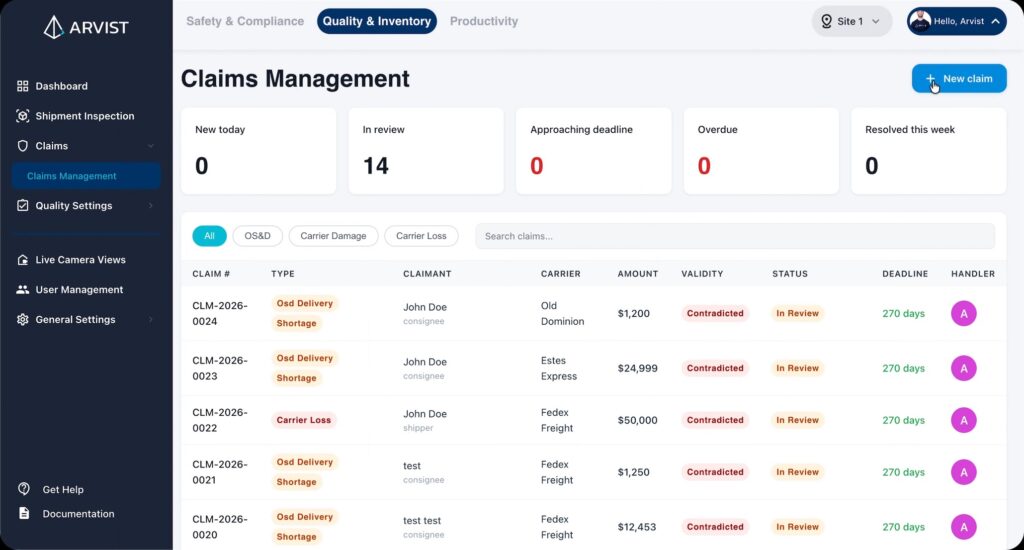
Claims Management launched inside the Quality Control platform this month. Every claim now arrives with its evidence already attached and organized, ready to act on instead of chase down.
- Instant claim intake: claims come in by email, PDF, or phone, and Arvist pulls the shipment ID and PRO number automatically, no one retyping numbers off a form
- Visual proof, already waiting: timestamped footage from dock doors, packing stations, and conveyors is sitting there the moment a claim comes in, not buried in a folder someone has to go find
- AI-powered triage: Arvist’s AI agent checks counts, damage, and load verification, so nobody’s scrubbing through hours of footage looking for the one frame that matters
- Dispute letters, drafted for you: documentation attached, letter ready, send button waiting
Why it matters
Freight claims have traditionally meant someone piecing together a case after the fact: pulling shipment records, hunting for footage, hoping the evidence is still findable weeks later. Claims Management flips that. The evidence is already attached to the shipment because it was being captured for quality control anyway, so investigation stops being a scavenger hunt and starts being a lookup.
Impact
- Claims work that used to take 12 to 15 hours per claim now takes about 3 minutes.
- Every claim arrives with timestamped visual proof already attached, no manual footage pull required.
- Dispute letters are drafted and ready to send instead of built from scratch.
Built for speed: alerts and setup 🔔
What we shipped
Two updates this month, both aimed at cutting the lag between “something happened” and “someone knew.”
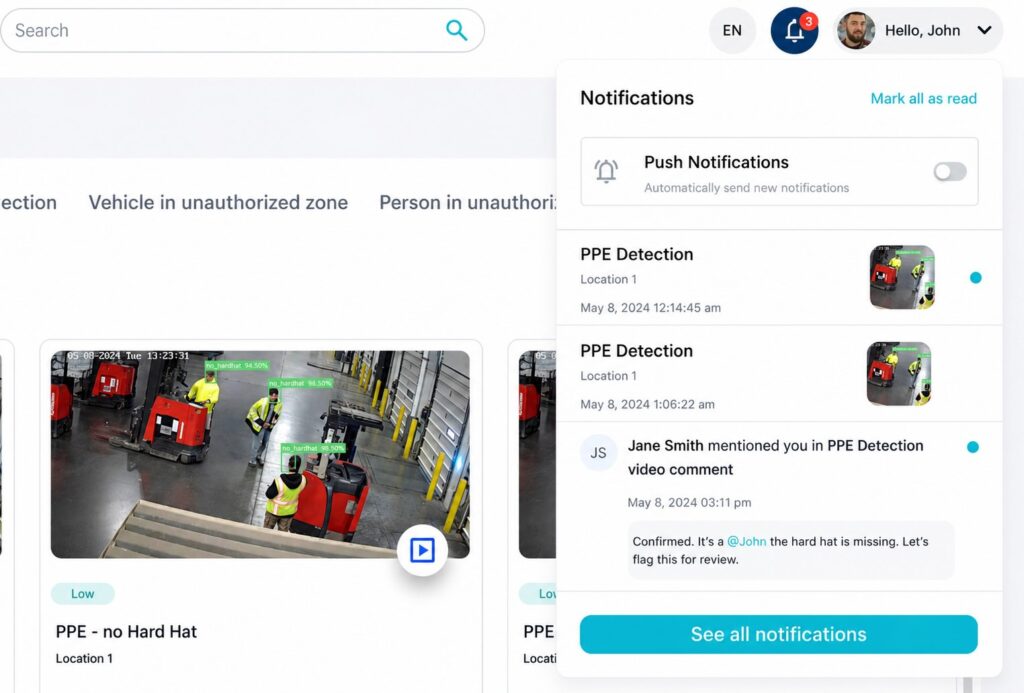
- Alerts in the top bar: safety and quality alerts, plus comments and tags from teammates, now surface in real time right at the top of the app
- Inspection Configuration: inspection settings are now a single reusable object instead of something rebuilt by hand for every station. Automation level drives triggering mode, product data capture scopes to labeled products, and station assignment stays separate from the config itself so the same setup travels cleanly across stations and clients
Why it matters
An alert that surfaces a day late is barely an alert. And setup work that has to be reinvented for every new station eats time that should be going toward actually running the floor. Real-time alerts close the first gap. A portable, reusable inspection config closes the second, cutting per-client setup time and keeping stations consistent instead of each one becoming its own snowflake.
Impact
- Safety and quality alerts show up the moment they happen, not after someone goes looking for them.
- Inspection settings are defined once and reused, not rebuilt for every station.
- New station types stand up faster with a config that’s consistent by default.
Detection gets sharper and reaches further 🔍
What we shipped
Detection got both more accurate and more capable this month.
- Product Image Catalog: not every product has a barcode you can actually scan. Product Image Catalog matches by visual embeddings instead
- Label-reading accuracy improvements: camera setup refinements and sharper text detection closed the gap on smaller, harder-to-read tags, cutting manual review and giving teams more defensible visual evidence on outbound shipments
Why it matters
The products without a scannable label are usually the ones that create the most uncertainty when a claim shows up, precisely because there’s nothing to scan them against. Matching by image brings those products into inspection coverage for the first time instead of leaving them as a blind spot. And sharper label reading means the products that do have a barcode get read correctly more often, so the coverage gets tighter on both ends.
Impact
- Products with no visible label or barcode can now be identified and inspected.
- Label-reading accuracy on outbound shipments keeps climbing, cutting manual review.
- Coverage extends to products that were previously invisible to automated inspection.
Looking ahead ⏩
Claims Management keeps moving. Right now Arvist handles the claim once it lands, from intake through a drafted dispute letter. Next up, filing moves into clients’ hands directly: when something arrives damaged, clients will be able to file the claim themselves, starting with claims against carriers, with supplier-side filing following the month after.
On the safety side, we’re building toward AI-generated safety reports designed for insurers. Arvist will use AI to understand what a client actually needs the report to show, then generate it, so building that documentation stops being a manual job every time.
If you want to see any of this in person, visit the Arvist Experience Center or talk to our team.