Packing station inspections in about 4 seconds ⚡
What we shipped
Packing station inspection got a round of upgrades this month covering speed, identification, and how packers use it day to day.
° Faster results: inspection latency dropped from about 20 seconds to about 4 seconds, and new lightweight models run twice as fast, so a single device can support many concurrent stations
° Look-alike products: a new model tells apart products that look nearly identical, the kind of mix-up that slips past a quick visual check
° More reliable code reading: QR and 2D barcode reading is more consistent from order to order
° Dunnage stays out of the count: a new ignore category keeps packing materials from being counted as product
° Scan to start or finish: packers can start or complete an inspection with a single scan, saving screen taps on every order
° Action-first prompts and role-based issue resolution: clearer prompts keep the workflow moving, and each issue goes to the person who can actually resolve it
Why it matters
At a packing station, inspection time is time the packer spends waiting. At 20 seconds per order, inspection becomes something a busy line works around. At about 4 seconds, it fits inside the normal packing motion. Cutting the false alerts from look-alike products and dunnage matters just as much, because packers trust the flags they get when those flags are consistently right.
Impact
° Inspection time down from about 20 seconds to about 4 seconds per order
° Fewer false alerts from look-alike products and packing materials
° Fewer screen taps per order, with issues routed to the right role

Claims Management now covers inbound shipments 🧾
What we shipped
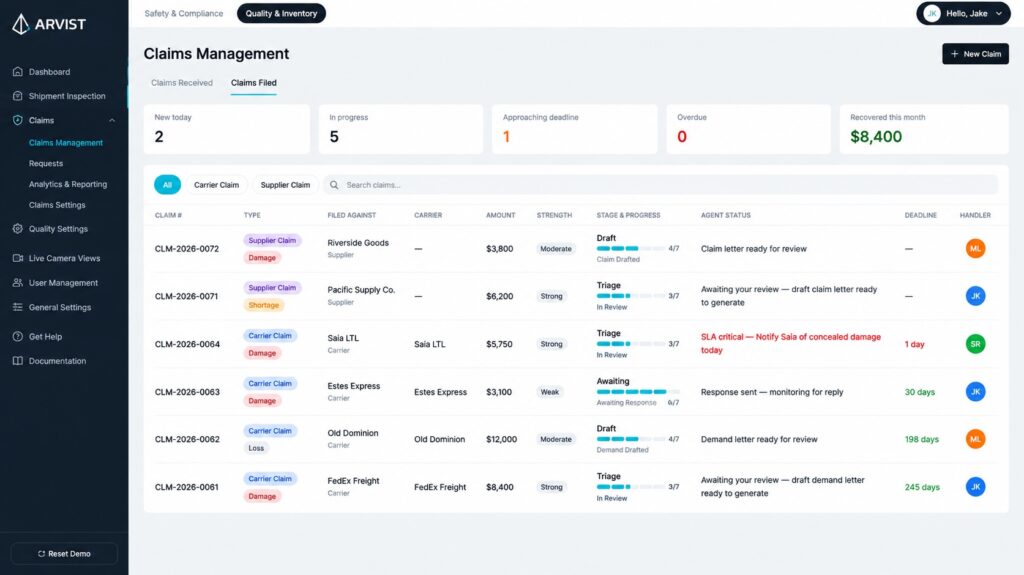
Arvist Claims Management already helped warehouses respond to claims on outbound shipments. It now also supports filing claims against suppliers and carriers when inbound shipments arrive with overages, shortages, or damage (OS&D).
° Start a claim from the inspection: when an inbound inspection flags an issue, a claim opens directly from that inspection
° Evidence already attached: the claim comes pre-filled with the order data and the photo and video evidence Arvist captured
° Received and filed claims in one place: claims against your operation and claims you file against suppliers and carriers sit side by side
Why it matters
Inbound OS&D is where money quietly leaks out of a warehouse. When a shortage or damaged pallet turns up at receiving, filing a claim usually means tracking down the PO, finding the right footage, and writing it up before the filing window closes. When that takes hours, it’s easy for smaller claims to get written off instead of chased. Starting the claim from the inspection that caught the problem removes most of that work.
Impact
° Inbound OS&D claims start from the inspection that caught the issue
° Nothing to re-enter and no footage to search through
° One platform for the full claims cycle: defending what you ship and recovering costs on what you receive
Plug Arvist into your WMS, your way 🔄
What we shipped
Arvist now offers flexible two-way WMS integration.
° Order data in: API push, webhook, scheduled polling, or a simple scan at the station
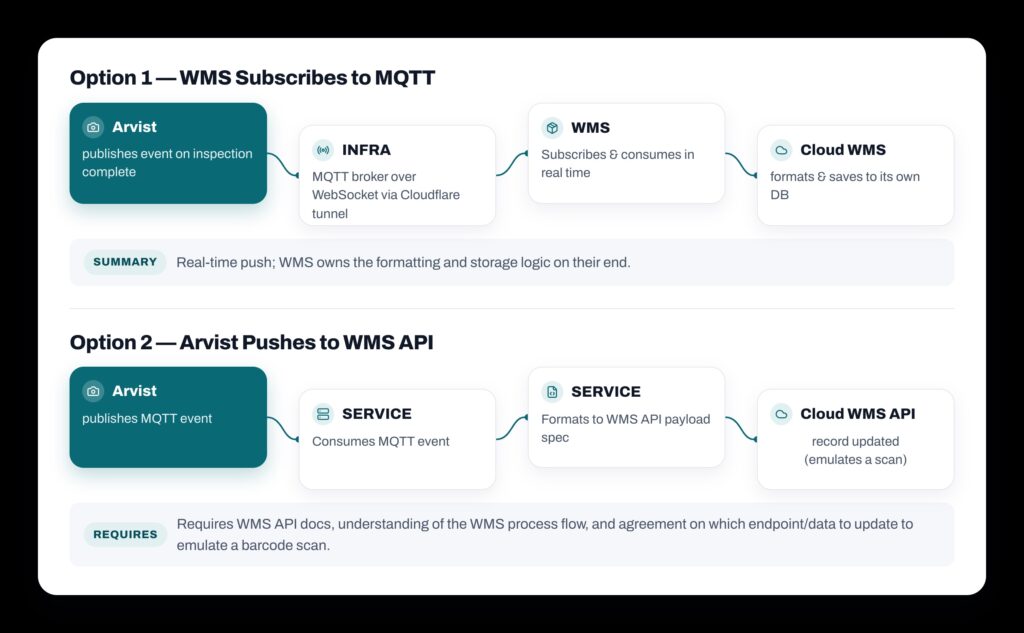
° Results out: inspection results flow back in real time over MQTT, or directly to the WMS API
° Secure connections: every connection runs over an encrypted tunnel
° Clear scope up front: the integration guide lists exactly which fields each inspection type needs
Why it matters
Integration is usually where a warehouse tech project slows down. Every WMS handles order data a little differently, and IT teams reasonably want to know what they’re signing up for before anything touches production. Offering several ways in and out means Arvist adapts to how a site’s WMS already works, and publishing the field requirements up front means IT can scope the work before kickoff. Explore our integrations.
Impact
° Fits the WMS a site already runs, whether it pushes, polls, or scans
° Inspection results land back in the WMS in real time
° IT knows the integration scope from day one
Worth a read: agentic AI in Claims Management ✍️
“Agentic AI” gets plenty of airtime, but rarely with specifics about how it works in supply chain. In his latest post, Eitan Hefetz, Arvist’s Head of Product & Partnerships, walks through how Arvist put it to work inside Claims Management. The agent runs a multi-step evidence search, matching claims to shipments from partial identifiers, pulling the inspection record, and assessing liability. When it can’t find a confident match, it hands the claim to a person rather than guessing, and every letter it drafts is grounded in that evidence and waits for a person’s approval before it goes out. The useful version of an agent, it turns out, is one that knows when to stop.
Key Takeaways
° Arvist packing station inspection now returns results in about 4 seconds, down from about 20, with fewer false alerts from look-alike products and dunnage.
° Arvist Claims Management now covers inbound OS&D, so warehouses can file claims against suppliers and carriers directly from the inbound inspection.
° Arvist’s two-way WMS integration accepts order data by API push, webhook, polling, or scan, and returns inspection results over MQTT or the WMS API.
Looking ahead ⏩
There’s more on the way, and we’ll keep sharing it here as it ships. If you want to see any of this in person, visit the Arvist Experience Center or talk to our team.