OS&D Reduction in Warehousing
OS&D (Overages, Shortages, and Damages) is one of those terms that gets thrown around in freight and logistics until it starts to sound like background noise. But strip away the acronym and what you’re really talking about is this: shipments that left your facility wrong, or arrived at the customer wrong, and now someone has to pay for it.
It’s not a dramatic failure. There’s no single moment where everything goes sideways. It’s quieter than that: a missing unit here, a crushed corner there, a pallet that shows up at the wrong dock, and it runs in the background across hundreds of loads until someone adds it up and realizes it’s been costing them a meaningful percentage of their revenue the whole time.
In this article:
° What OS&D means and why it shows up in freight and warehouse operations so consistently
° The most common causes and why most of them trace back to the same structural gap
° What OS&D costs operationally, beyond the obvious line items
° The strategies that actually move the needle, from process changes to technology
° How vision AI closes the gap that every other approach leaves open
What Is OS&D and Why Does It Matter?
OS&D stands for Overages, Shortages, and Damages. Each one represents a different way a shipment fails to match what was supposed to happen.
An overage means more product arrived or shipped than was expected: extra units that weren’t ordered, which creates its own downstream mess even if it sounds like a good problem to have.
A shortage means something that should have been there wasn’t: missing units, missing pallets, or missing SKUs that the customer ordered and didn’t receive.
Damage means product arrived in unusable condition: crushed packaging, broken stretch wrap, unstable stacks that shifted in transit.
In practice, these three tend to cluster together. The same conditions that create shortages: high-volume shifts, understaffed docks, abbreviated verification steps, also create mis-loads and damage. OS&D isn’t three separate problems. It’s one structural gap that shows up in three different ways depending on the day.
That gap is expensive. Industry estimates put OS&D losses at 5 to 10% of annual warehouse revenue when you factor in lost product, freight claims, extra labor, and the customer relationship costs that don’t show up anywhere on a spreadsheet. For a mid-size operation running at any real volume, that’s not a rounding error. That’s a line item.
Why OS&D Keeps Happening
The frustrating thing about OS&D is that most of the root causes aren’t mysterious. They’re familiar, and they’ve been familiar for a long time. That’s part of what makes them so persistent.
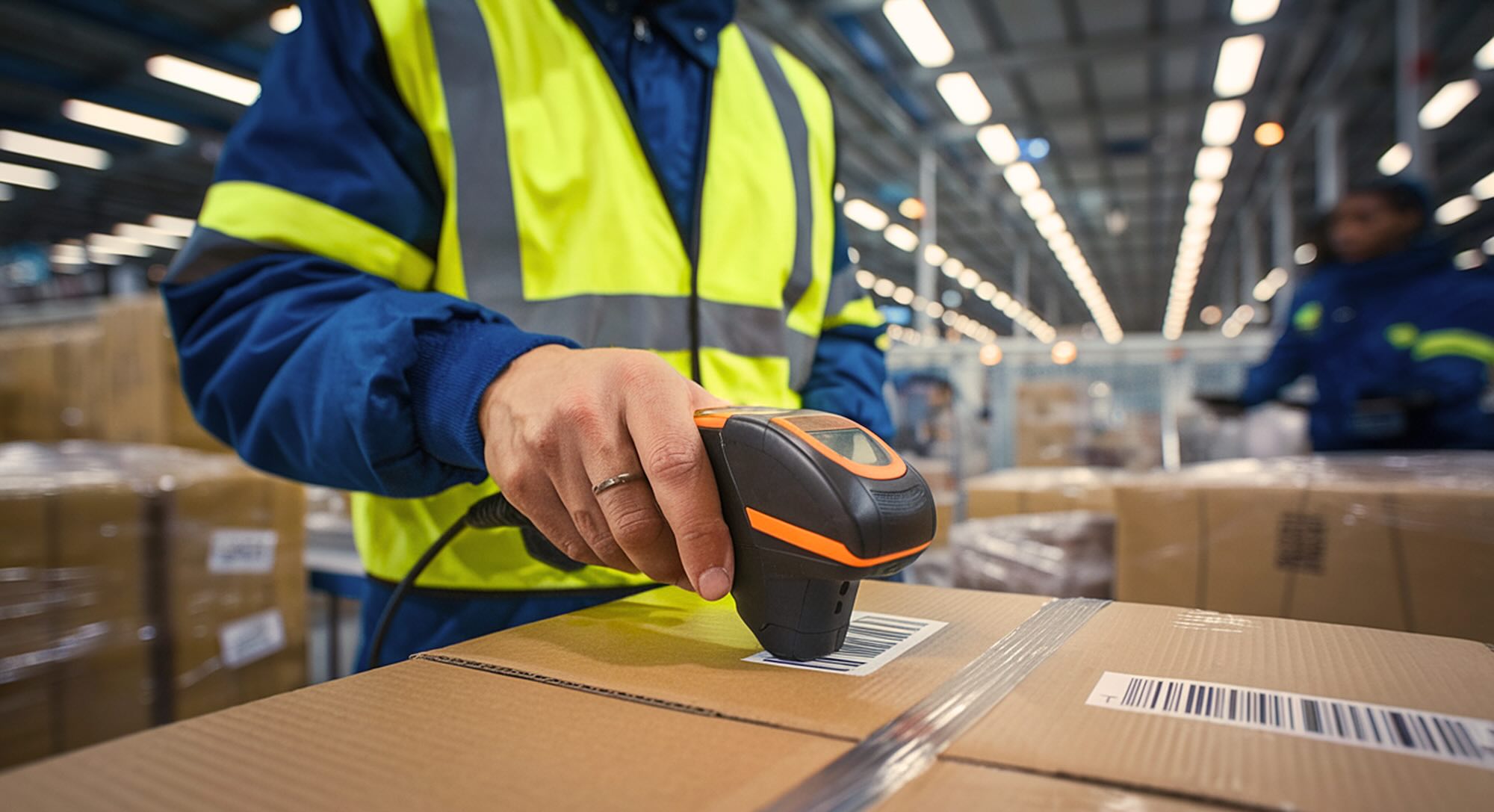
Inventory record errors create a gap between what the system thinks was loaded and what actually moved. If the WMS shows 50 units but only 48 were picked, the shortage is already baked in before the truck arrives. Nobody is lying. The count was just wrong, and the process didn’t catch it.
Picking and packing mistakes are the human-error version of the same problem: wrong quantities, wrong SKUs, items that looked fine at the time but had visible damage that went unnoticed in the pace of a busy shift. An overage can happen just as easily as a shortage if an extra item gets added by mistake.
Labeling and documentation errors are where overages and shortages start happening simultaneously. Mislabeled pallets get sent to the wrong customer. One customer gets product they didn’t order; the other is short. Both are calling you at the same time.
Transit damage gets its own category because it’s the hardest to attribute and the easiest to dispute. A pallet that loaded fine can arrive damaged, and without documentation of its condition at the dock, you’re in a conversation about when it happened that defaults to whoever has better records. We covered the full picture of how outbound errors start at the dock door — and why the timing of detection changes everything about what they cost.
Theft and loss account for a smaller share of OS&D incidents but create shortages that are particularly difficult to resolve because there’s no clear error in the process to point to — just a discrepancy that requires investigation to understand.
What all of these have in common is that they’re most likely to occur, and least likely to be caught, at exactly the moment when throughput pressure is highest and verification resources are thinnest. None of that is accidental. It’s just how the process was built.
The Full Cost of OS&D (It’s Not Just the Claim)
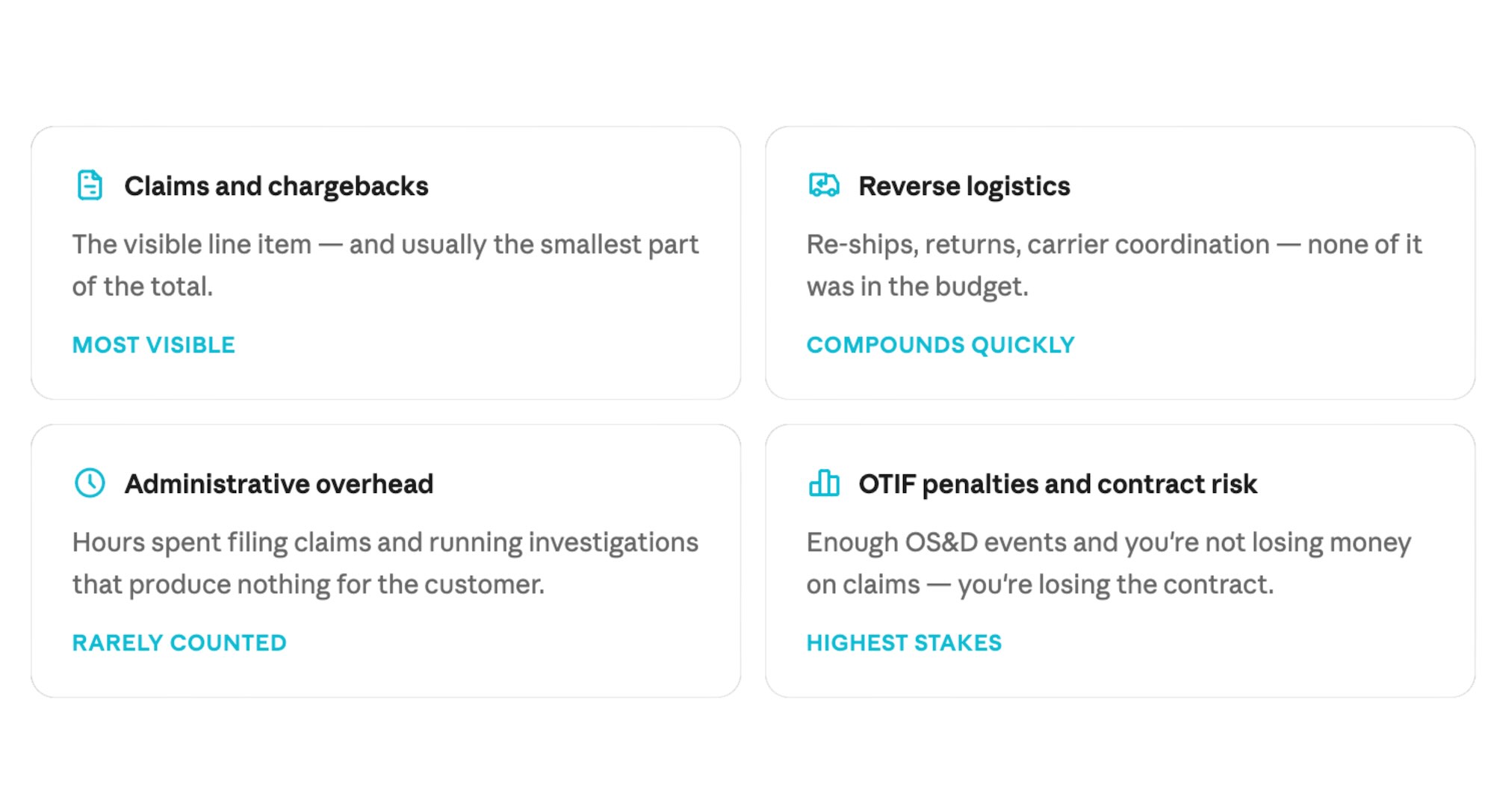
The obvious costs are the ones that show up in claims and chargebacks. A shortage claim from a major retail partner, a freight claim for damaged goods, a re-ship for a mis-loaded pallet. Those are real, and they add up.
But the less visible costs are often larger.
Reverse logistics is expensive in ways that compound quickly. Handling a return, expediting a replacement shipment, coordinating the disposition of damaged product — none of that was in the labor budget, and all of it pulls people away from productive work. One shortage that triggers an emergency re-ship might cost more in management time than the missing units were worth.
Administrative overhead is the part that rarely makes it into an ROI conversation. Logging OS&D incidents, filing freight claims, running internal investigations, responding to customer disputes; this is work that consumes hours and produces nothing for the customer except a resolution that should never have been necessary. For operations with high shipment volumes, it can become a significant portion of someone’s job.
Inventory accuracy takes the slow hit. Every OS&D event that isn’t caught and reconciled immediately introduces a discrepancy between what the system thinks is there and what’s actually there. Those discrepancies accumulate. They surface later in cycle counts, reorder miscalculations, and fulfillment errors that nobody can immediately explain because the root cause happened weeks ago.
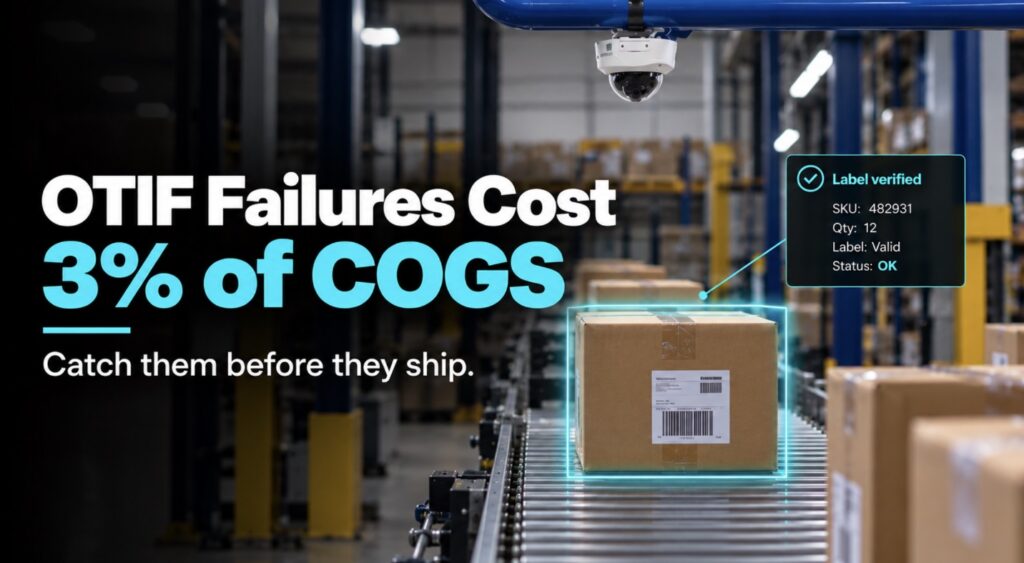
OTIF performance (On-Time In-Full) is where OS&D shows up most directly in customer and carrier relationships. Most major retailers have OTIF requirements with financial penalties for non-compliance, and shortages and damages are direct hits to that metric. A warehouse consistently producing OS&D events isn’t just losing money on the claims. It’s potentially losing the contract. For a closer look at how short ships and chargebacks specifically drain DC margins, that breakdown is worth reading on its own.
How to Reduce OS&D
Standardized procedures and accountability at each handoff are the starting point. Every operation already has some version of these in place. The question isn’t whether you have a process, it’s whether it holds on the days when throughput pressure is highest and the team is stretched thin. For most DCs, it doesn’t. Not because the team isn’t trying, but because no manual process was ever designed to hold consistently at scale under those conditions.
Cycle counts and outbound audits catch discrepancies before they ship. A process that flags inventory gaps at the pick stage rather than the receiving stage is always cheaper than one that discovers shortages three days later. The same logic applies on the inbound side — missed dock inspections on incoming shipments create the same kind of slow-burn inventory damage. The closer to the source the detection happens, the lower the cost.
Claims management and documentation discipline are what protect you when prevention falls short. A well-run claims process: clear procedures for documenting discrepancies at receipt, consistent BOL notations, timestamped photos of damaged freight before it moves off the dock — doesn’t reduce OS&D events, but it changes what they cost you. Undocumented claims are hard to win. Well-documented ones often resolve without a fight. The operations that recover the most from OS&D incidents are the ones that treated documentation as a habit long before the dispute arrived.
Incident tracking and root cause analysis are what turns reactive investigation into structural improvement. If every OS&D event gets logged, reviewed, and traced back to its origin, patterns become visible. A recurring shortage tied to a specific pick location or shift configuration can be addressed systematically instead of endured indefinitely.
How Does Vision AI Reduce OS&D Claims?
The strategies above all have real value, and operations that implement them consistently will see OS&D rates improve. But no combination of process fixes eliminates OS&D entirely. Freight gets damaged in transit. Carriers lose things. Discrepancies happen at the dock on the days when the team is stretched thin and three trucks arrived in the same window. The goal isn’t a warehouse that never produces an OS&D event. It’s one where fewer errors leave the building undetected, and the ones that do are easier to resolve.
Vision AI, specifically, camera-based inspection systems deployed at dock doors and key inspection points, addresses the first part of that. Not by replacing the people, but by providing a layer of verification that runs consistently regardless of staffing levels or shift conditions.
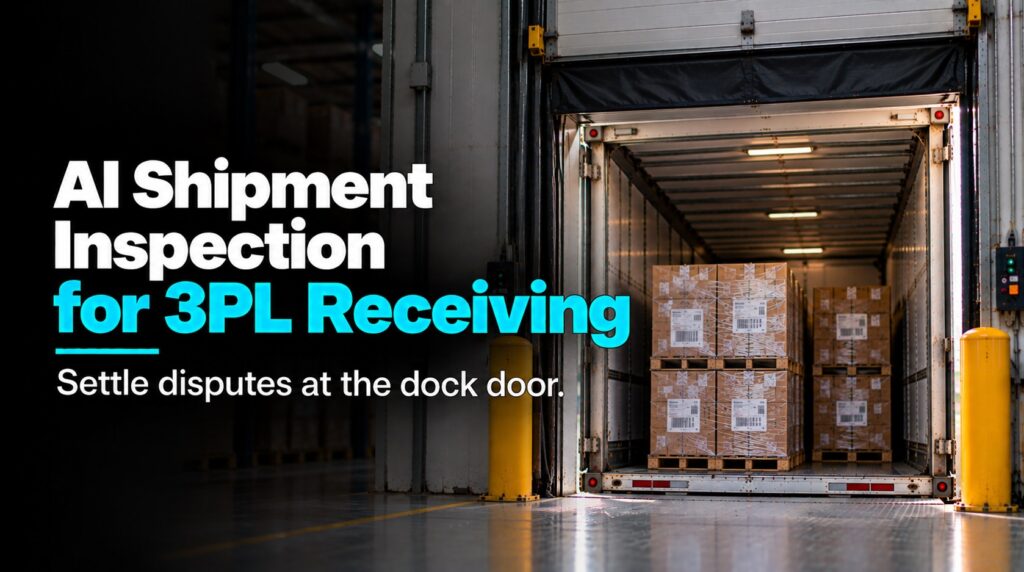
Here’s how it works in practice. Cameras mounted at dock doors provide full visual coverage of every pallet as it moves through, and the system is running the entire time:
° Reads labels and validates SKUs and quantities against the WMS in real time
° Detects visible damage across pallet surfaces before anything clears the door
° Flags mismatches: wrong dock, missing unit, BOL discrepancy — immediately, while the truck is still at the door
That timing matters. The difference between catching a shortage at the dock and catching it three days later in a customer dispute isn’t the severity of the original error. It’s entirely when the detection happened. Vision AI moves that detection to the earliest possible moment, which is the cheapest and simplest version of the resolution.
Machine learning adds a predictive layer on top. By analyzing patterns across OS&D incidents: which product types generate damage claims most frequently, which shifts or dock doors have higher error rates, the system surfaces opportunities for targeted improvement that aren’t visible from incident reports alone.
The result is an operation that catches more errors before they ship, and has better information about the ones that still get through. That’s not zero OS&D. But it’s a fundamentally different position than hoping the process held on a busy Friday afternoon.
How Does Reducing OS&D Improve Warehouse Performance?
Operations that get OS&D under control don’t just see lower claim rates and better OTIF scores. They see a different kind of dock, one where the verification step isn’t the thing that gets abbreviated when the clock is running. Problems that used to surface downstream in expensive, time-consuming disputes get caught while they’re still cheap and simple to fix. The investigation cycles get shorter because fewer things need investigating. That’s not a dramatic transformation. It’s just what the operation looks like when the structural gap finally gets closed.
If you want to see what this looks like in practice, the Arvist Experience Center is the place to do it — a working warehouse in Chicago, not a demo stage. The Load Verification page is a good place to start if you want the overview first.